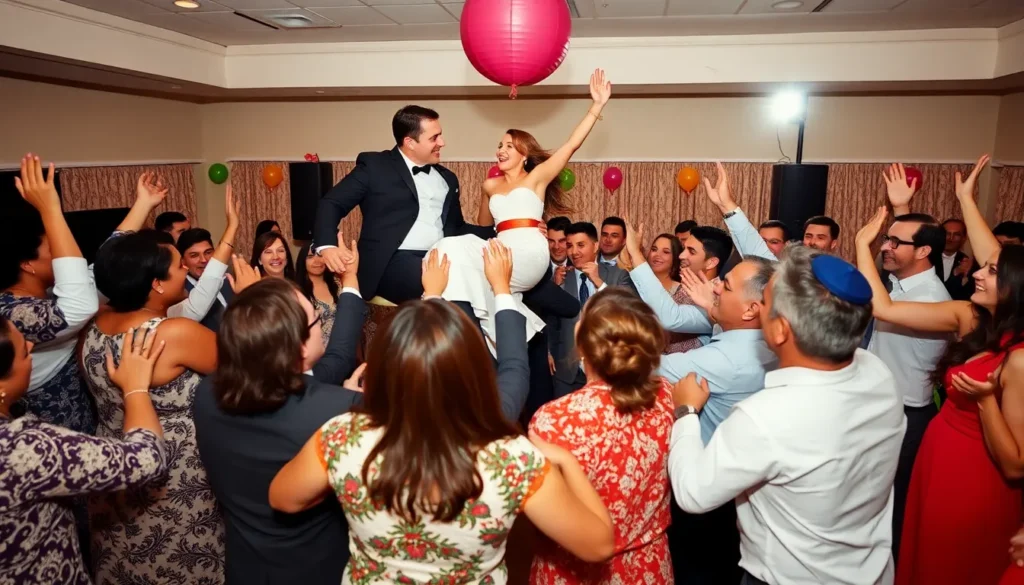
Jewish weddings are a vibrant tapestry of culture, love, and, of course, dancing that could make even the most rhythmically challenged guest bust a move. Traditional dances like the Hora not only get everyone on their feet but also weave a sense of community and joy that’s hard to match. Imagine the scene: a circle of family and friends lifting the newlyweds into the air, laughter echoing, and feet shuffling to the beat of a lively tune.
Overview of Traditional Dance at Jewish Wedding
Traditional dance holds a prominent role in Jewish weddings, symbolizing joy and unity. The Hora, a circle dance, celebrates the couple’s happiness and connects guests in a festive atmosphere. Families often join hands, forming a circle that embodies togetherness and love.
In many Jewish weddings, the dancing begins shortly after the ceremony. The upbeat music energizes attendees, inviting them to participate. Instruments like violins, accordions, and percussion add to the celebratory spirit. Each dancer contributes to the collective joy, turning the event into an exhilarating experience.
Various traditional dances exist beyond the Hora. Thefreilachs, another popular choice, showcases lively choreography with fast-paced tempos. Participants may dance in pairs or teams, further enhancing the communal feel. The lively beat encourages everyone to join in, regardless of their dancing skills.
Furthermore, traditional dances often incorporate cultural customs and meanings. For instance, some couples include the ‘Kiri’ dance, which symbolizes the sharing of responsibility within the marriage. This dance echoes the joyous sentiments expressed throughout the wedding festivities.
Dancing at Jewish weddings goes beyond mere entertainment. These shared moments create lasting memories for the couple and their guests. A strong sense of community flourishes as participants engage in rhythmic movements, deepening connections among family and friends.
Ultimately, traditional dance represents more than just a ritual; it serves as a powerful expression of love, joy, and cultural heritage. Integrating these dances into the wedding reinforces the significance of the occasion while creating an unforgettable celebration.
Significance of Dance in Jewish Weddings
Dance plays a crucial role in Jewish weddings, symbolizing joy and unity.
Cultural Heritage
Cultural heritage comes alive during traditional dances at Jewish weddings. Celebratory dances like the Hora and freilachs reflect longstanding customs. Each dance holds historical significance, representing values and traditions passed down through generations. Shared experiences during these dances reinforce the community’s bond, inviting everyone to participate. The rhythmic movements and lively music create a joyous atmosphere, connecting guests to their cultural roots while honoring the couple. Jewish weddings not only celebrate the union but also embrace the richness of shared heritage, making these dances integral to the event.
Emotional Connection
Emotional connection deepens through dance at Jewish weddings. Couples often express happiness through lively movements, fostering togetherness among family and friends. Participants share laughter and joy while lifting the couple in celebration, creating lasting memories. Dances like the Hora encourage even those with two left feet to join in, embracing inclusivity. A festive spirit envelops the gathering, reflecting shared love and support. Dancers communicate their emotions in ways words cannot, uniting everyone present in a heartfelt celebration. Through these shared moments, the sense of belonging strengthens, ensuring that the joyous occasion remains etched in everyone’s hearts.
Common Types of Traditional Dances
Traditional dances at Jewish weddings create vibrant experiences. Each type embodies rich cultural heritage, enhancing the celebration.
Hora
Hora stands out as the quintessential dance at Jewish weddings. Participants form a circle and link hands, generating a sense of unity. Couples are often lifted on chairs, showcasing their joy and the support of family and friends. This energetic dance is typically accompanied by lively music, encouraging everyone to join regardless of skill level. Celebrated primarily after the ceremony, the Hora symbolizes communal happiness. The entire gathering moves together, reflecting the shared joy of the occasion. Family and friends come together, representing interconnectedness and love.
Yemenite Dance
Yemenite Dance features unique movements and rhythms that highlight cultural traditions. This dance, characterized by intricate footwork and spirited rotations, celebrates the unique heritage of Yemenite Jews. Participants often form smaller circles or lines, allowing more intimacy than larger dances. Music for the Yemenite Dance frequently includes traditional Yemenite instruments, providing a distinct sound that dances resonate with. Expressions of joy and community shine through as guests participate actively. Each movement connects dancers to their roots, creating memorable experiences. Engaging in this dance fosters connections among guests while honoring their shared history.
Role of the Community in Dance
Community involvement is essential to the vibrancy of traditional dance at Jewish weddings. Guests participate actively in dances, transforming the celebration into a collective experience filled with joy and laughter.
Participation and Involvement
Active participation fosters a sense of belonging among guests. Each dancer contributes to the lively atmosphere, regardless of skill level. With everyone welcome to join, the Hora allows family and friends to connect through shared movement. Attendees often lift the couple on chairs, symbolizing community support and shared happiness. Such moments create bonds that last beyond the wedding day. Couples feel enveloped by the love surrounding them, reinforcing their commitment. Through dance, connections deepen among relatives and friends, making the celebration inclusive and memorable.
Celebratory Atmosphere
A festive atmosphere permeates the wedding through the energy generated by dance. Traditional songs and lively melodies inspire guests to express their joy through movement. Dancing, particularly the Hora, fills the venue with laughter and excitement. Guests often surround the couple, creating a circle that reflects unity and love. The rhythmic beats resonate with cultural roots, enhancing the emotional experience. As participants engage with enthusiasm, the celebration transforms into a heartfelt display of togetherness. This vibrant atmosphere ensures that each wedding becomes a cherished memory for everyone present.
Traditional dance at Jewish weddings embodies joy and unity while celebrating cultural heritage. Each dance represents a unique aspect of community involvement and shared happiness. The Hora and other vibrant dances create an atmosphere filled with laughter and connection among family and friends.
These moments of togetherness strengthen bonds and create lasting memories that extend beyond the wedding day. As guests participate in the rhythmic movements and lively music, they not only honor the couple but also connect with their roots. The lively spirit of these dances ensures that every celebration remains unforgettable, making the joyous occasion a true reflection of love and togetherness.