Fans of the hit series “Stranger Things” often find themselves lost in its nostalgic charm and thrilling mysteries. But as they binge-watch the latest season, a burning question lingers: is this beloved show based on a book? While the Upside Down may feel like it’s plucked from the pages of a gripping novel, the truth is a bit more complex and, dare we say, intriguing.
The Duffer Brothers crafted this iconic series with a unique blend of inspiration from various pop culture phenomena, but it’s not directly adapted from any single book. Instead, it’s a vibrant tapestry woven from the threads of 80s horror, science fiction, and adventure stories. So grab your Eggo waffles and settle in as we dive deeper into the origins of “Stranger Things” and uncover the literary influences that shaped this captivating world.
Overview of Stranger Things
“Stranger Things” debuted on Netflix in July 2016, quickly captivating audiences with its blend of horror, science fiction, and nostalgia. Set in the fictional town of Hawkins, Indiana, the series primarily revolves around the disappearance of a young boy named Will Byers. His friends and family embark on a quest to find him, uncovering supernatural occurrences along the way.
Character development plays a crucial role in the series. Viewers meet a group of children, including Mike, Lucas, and Dustin, who encounter Eleven, a girl with psychokinetic abilities. Eleven’s past is intertwined with a secretive government lab conducting experiments on children. Each character adds unique depth to the unfolding narrative, creating a sense of camaraderie and tension.
The 1980s backdrop significantly enhances the show’s appeal. It incorporates elements from that era, including music, fashion, and pop culture references. Iconic films and books from the 80s heavily influence the storytelling, appealing to both nostalgic viewers and newcomers.
Themes of friendship, loyalty, and fear run throughout the series. Characters face monsters from an alternate dimension known as the Upside Down, symbolizing internal and external struggles. This blend of real-life challenges with supernatural horror resonates with audiences across different age groups.
Critics and fans praise “Stranger Things” for its storytelling and retro aesthetic. The Duffer Brothers, who created the series, expertly weave varying influences into a cohesive and engaging narrative. While not based on any specific book, the show draws inspiration from numerous literary and cinematic works, creating a captivating world that continues to expand with each season.
The Origins of Stranger Things
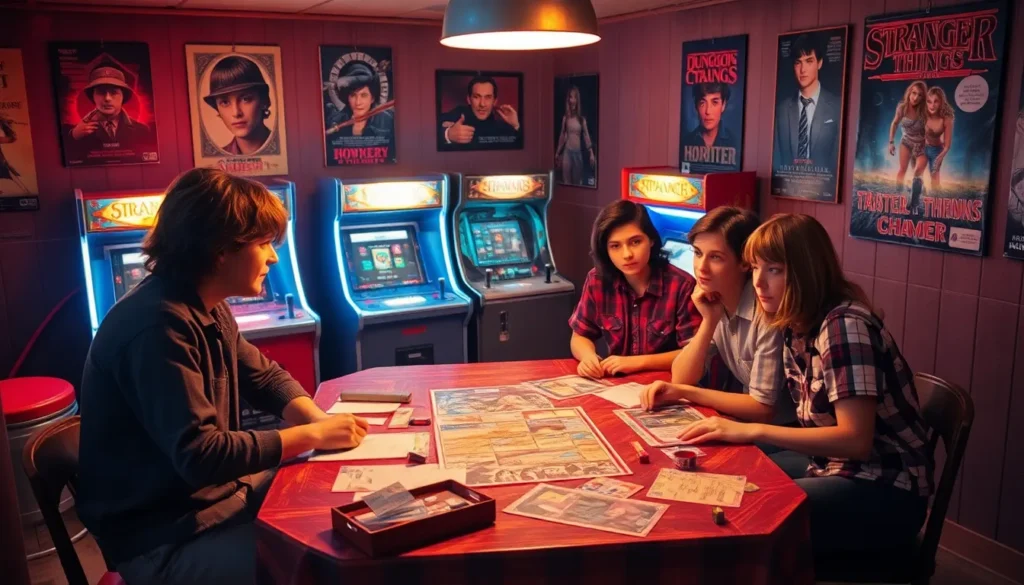
“Stranger Things” draws from a rich tapestry of influences to create its unique narrative. The show has become synonymous with 80s nostalgia, evoking memories of classic films and literature.
Inspirations from Literature
Numerous literary works inspired the Duffer Brothers while crafting the series. Stephen King’s novels significantly influenced the eerie atmosphere, particularly “It” and “The Body.” H.P. Lovecraft’s horror elements contributed to the show’s supernatural themes. They incorporated references to works like “Firestarter” and “The Talisman,” enhancing the storytelling. The incorporation of various genres, including science fiction and coming-of-age tales, creates an engaging narrative that captivates audiences. Familiar themes of friendship and adventure resonate through the characters’ journeys.
Influence of the 1980s Culture
The cultural landscape of the 1980s heavily influenced the show’s aesthetic. Iconic films such as “The Goonies,” “E.T.,” and “Stand By Me” shaped the tone, blending horror with youthful adventure. Fashion and music from the era play vital roles, immersing viewers in the time period. Synth-heavy soundtracks evoke nostalgia, heightening emotional connections. Additionally, references to Dungeons & Dragons and arcade gaming reflect the cultural interests of the decade. This rich incorporation of 1980s culture anchors the narrative, appealing to both those who experienced it firsthand and newer generations discovering it.
Comparing the Series to Published Works
“Stranger Things” incorporates various literary themes and tropes, reflecting its influences. Nostalgia plays a vital role, reminiscent of classic coming-of-age stories where characters navigate personal challenges. Friendship emerges as a key theme, similar to Stephen King’s works, uniting characters against external threats. Supernatural elements evoke H.P. Lovecraft’s creeping dread, drawing viewers into a world of horror and fantasy. Furthermore, the show’s blend of science fiction and fantasy mirrors traditional adventure tales, highlighting the role of imagination in childhood experiences.
Common Themes and Tropes
The series often highlights key themes found in classic literature. Friendship bonds the group as they face dangers collectively. Loss serves as a recurring element, intensifying characters’ struggles and resilience. Fear of the unknown resonates through the Upside Down, paralleling tropes in horror fiction. Coming-of-age experiences manifest in the characters’ growth as they confront their deepest fears. Additionally, elements of government secrecy reflect dystopian literature, contrasting innocence with darker realities.
Character Similarities and Differences
Character development in “Stranger Things” mirrors archetypes from established literature. Eleven, for instance, exemplifies the tortured hero, akin to many protagonists in King’s novels. Will’s experiences reflect the lost child motif, often seen in adventure stories. Meanwhile, Mike, Lucas, and Dustin represent a diverse group of friends, reminiscent of collective adventures in classic tales. Each character displays unique personalities, illustrating growth and friendship. While the core dynamics resonate with literary counterparts, the characters’ distinct backgrounds offer fresh perspectives that enrich the narrative.
The Impact of Stephen King and Other Authors
Stephen King’s influence pervades “Stranger Things.” His works, particularly “It” and “The Body,” inspire character dynamics and narrative tension. The eerie atmosphere mirrors King’s ability to blend horror with coming-of-age themes. H.P. Lovecraft also leaves a mark, as his elements of creeping dread enhance the show’s supernatural aspects.
References to King’s “Firestarter” and “The Talisman” provide additional layers to the storytelling. They forge connections between characters and the uncanny events they face. Readers recognize familiar tropes while experiencing a fresh narrative. It creates a tapestry woven from diverse literary sources.
Character archetypes play a crucial role in shaping the series. Eleven embodies the tortured hero, while Will represents the lost child motif. Friends unite against external threats, reflecting prevalent themes found in King’s narratives. Their journeys resonate with audiences familiar with classic literature.
Pop culture references amplify the show’s appeal. Iconic 1980s films such as “The Goonies” and “E.T.” connect with viewers across generations. Synth-heavy soundtracks and gaming nods further ground the series in its nostalgic roots. The collective experiences of Mike, Lucas, and Dustin deepen viewer engagement.
Themes of loyalty and friendship drive character interactions. The supernatural aspects echo Lovecraft’s impact, inviting viewers into a world balancing horror and fantasy. Emotional struggles resonate with many, encapsulating fears of the unknown. “Stranger Things” ultimately stands as a tribute to the rich literary influences shaping its narrative.
“Stranger Things” captures the essence of 80s pop culture while weaving a narrative that resonates deeply with audiences. Its unique blend of horror and nostalgia draws from various literary influences without being tied to a specific book. The Duffer Brothers masterfully incorporate elements from Stephen King’s works and other iconic stories to create a rich and immersive experience.
As viewers delve into the supernatural world of Hawkins, they encounter themes of friendship, fear, and the struggles of growing up. The show stands as a testament to the power of storytelling, reflecting the fears and hopes that define the human experience. Whether through the lens of nostalgia or fresh discovery, “Stranger Things” continues to captivate and inspire, proving that great stories transcend their origins.